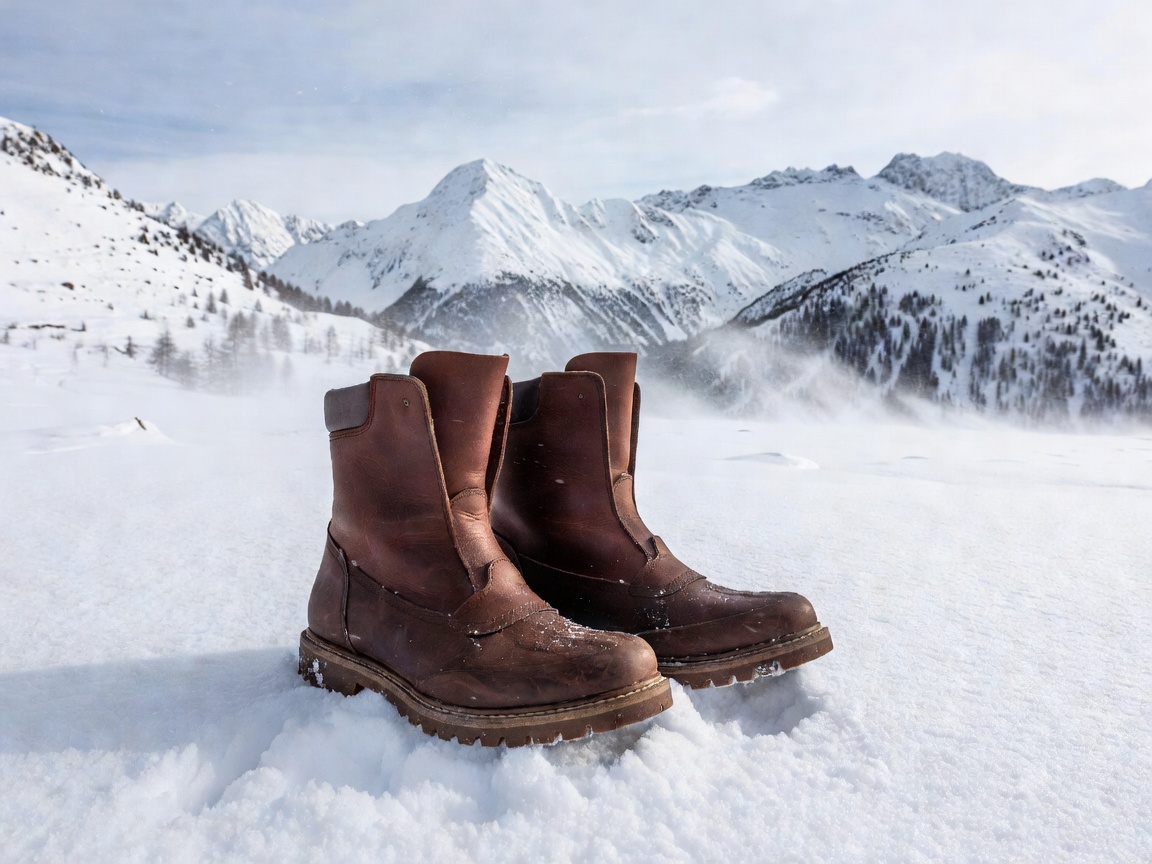
The Ground Cold-Sink Hazard
When standing on packed alpine snow or frozen ice in places like Bad Gastein or Mayrhofen, the vast majority of human heat loss from the lower extremities does not occur into the air; it occurs through direct conduction into the frozen earth. A boot that looks warm from the outside will leave feet painfully numb within 20 minutes if the sole assembly lacks a true thermal break.
Proper Austrian winter boots utilize thick dual-density EVA or polyurethane midsole compounds paired with felted wool or cork sub-footbeds that block ground frost from conducting through the outsole into the foot bed.
Outsole Chemistry: The Ice Friction Dilemma
Standard summer hiking rubber turns rock-hard and glassy when ambient temperatures drop below freezing, transforming lugged soles into slippery sled runners on icy cobblestones.
- Cold-Climate Rubber Compounds: Formulated with specialized elastomers that stay flexible and tacky even at -25°C, ensuring lugs can mechanically conform to microscopic surface roughness on hard-packed snow.
- Vibram Arctic Grip & Micro-Fiber Infusions: Modern technological outsoles feature specialized lug inserts embedded with microscopic glass fibers. Under foot pressure, these fibers bite through the microscopically thin liquid layer on wet ice, preventing devastating slips.
Upper Construction: Norwegian Welts vs. Molded Shells
In the Austrian Alps, footwear divides into traditional mountain bootmaking and modern technical pac boots:
Zwiegenäht (Norwegian Double-Stitched Welt): The undisputed hallmark of Tyrolean artisan shoemaking. Full-grain oil-waxed mountain cowhide (often 2.8 mm to 3.2 mm thick) is hand-sewn to the insole and midsole with visible dual rows of heavy thread. This construction is water-impervious, exceptionally stiff for ankle support on frozen banks, and can be fully resoled repeatedly over a lifetime.
Vulcanized Rubber Pac Boots: Feature an impenetrable molded rubber lower "duck" shoe bonded to a flexible leather or ballistic nylon shaft. These are the preferred choice for heavy slush days, deep powder shoveling, and unplowed village trails.
| Footwear Type | Insulation Lining | Waterproof Method | Weight per Pair | Best Suited For |
|---|---|---|---|---|
| Double-Welted Lammfell Boot | Genuine 15 mm sheared sheepskin | Hydrophobic wax + Norwegian welt | 1,600 – 2,100 g | Austrian village strolling, cold horse-sleighs |
| Technical Alpine Pac Boot | Removable 9 mm felted wool liner | Vulcanized lower rubber shell | 1,800 – 2,400 g | Deep powder, valley freeze shifts, snowshoeing |
| Insulated Winter Hiker | Gore-Tex Insulated Comfort (200 g synthetic) | Integrated internal bootie | 1,200 – 1,450 g | Active winter hill walking, packed trail climbs |
Internal Linings: Natural Shearling vs. Synthetic Fiberfills
For ultimate foot health during high-end alpine leisure, nothing surpasses genuine lambskin (Lammfell). Natural shearling is inherently antibacterial, meaning boots can be worn continuously on multi-day ski vacations without accumulating noxious odors. Furthermore, curly sheep fibers hold sweat away from socks, maintaining a bone-dry foot environment.
For technical snowshoeing where heavy perspiration is inevitable, removable felt inner booties are superior because they can be removed and placed near the tiled ceramic stove (Kachelofen) to dry completely overnight.