The Millennia-Old Origins of Alpine Loden
Long before microfibers and synthetic laminates, alpine farmers and mountain guides in Styria and Tyrol relied on Loden. Originating in the 12th century, traditional loden is not a synthetic fleece or loose tweed; it is a dense, woven wool fabric that undergoes an exhaustive mechanical process called fulling (Walken).
Through heat, continuous moisture, and reciprocating mechanical hammers, raw sheep's wool is intentionally shrunk by up to 40 percent. The individual scales of the wool fibers become irreversibly entangled, creating a felt-like matrix that is impervious to gusting winds while preserving microscopic air pockets that trap ambient body warmth.
Walkstoff (Boiled Wool) vs. Strichloden
Within high-end Austrian garment tailoring, two primary forms of felted wool dominate alpine collections:
- Walkstoff (Knitted Boiled Wool): Created by first knitting coarse virgin wool yarn into an oversized jersey and then vigorously tumbling it in heated water baths. The result is flexible, naturally elastic, and quiet, commonly used in the iconic Austrian Walkjanker jackets and mid-layer cardigans.
- Strichloden (Directional Woven Loden): Woven on traditional looms, fulled, and then repeatedly brushed with dried teasel plants to align all exterior fibers in a single downward direction. This directional nap acts like natural shingles on a roof: falling raindrops and melting snowflakes run down the garment surface without penetrating the inner weave.
Natural Lanolin: The Hydrophobic Secret
Unlike industrial wools that are stripped completely clean with caustic detergents, Austrian alpine wool mills retain a precise fraction of the natural sheep wax known as lanolin. This biological lipid coats each fiber, causing rain and wet snow to bead up on the sweater surface. Furthermore, wool fibers can absorb up to 30% of their dry weight in vapor without feeling clammy or losing their thermal loft.
| Wool Category | Fabric Density | Wind Resistance | Typical Alpine Application | Care Protocol |
|---|---|---|---|---|
| Tyrolean Walkjanker | 450 – 600 g/m² | Moderate to High | Mid-layer skiing, evening mountain lodge dining | Air out in moist fog, spot clean only |
| Mountain Hunting Loden | 650 – 850 g/m² | Severe Wind Proofing | Heavy winter overcoats, sledge rides | Dry brush when dry, avoid washing machines |
| Fine Merino Turtlenecks | 200 – 260 g/m² | Low (requires shell) | Thermal next-to-skin layer, town wear | Gentle cold hand wash or wool cycle |
Iconic Styling: Real Horn Buttons and Box Pleats
An authentic Austrian wool jacket is immediately recognizable through historic tailored accents:
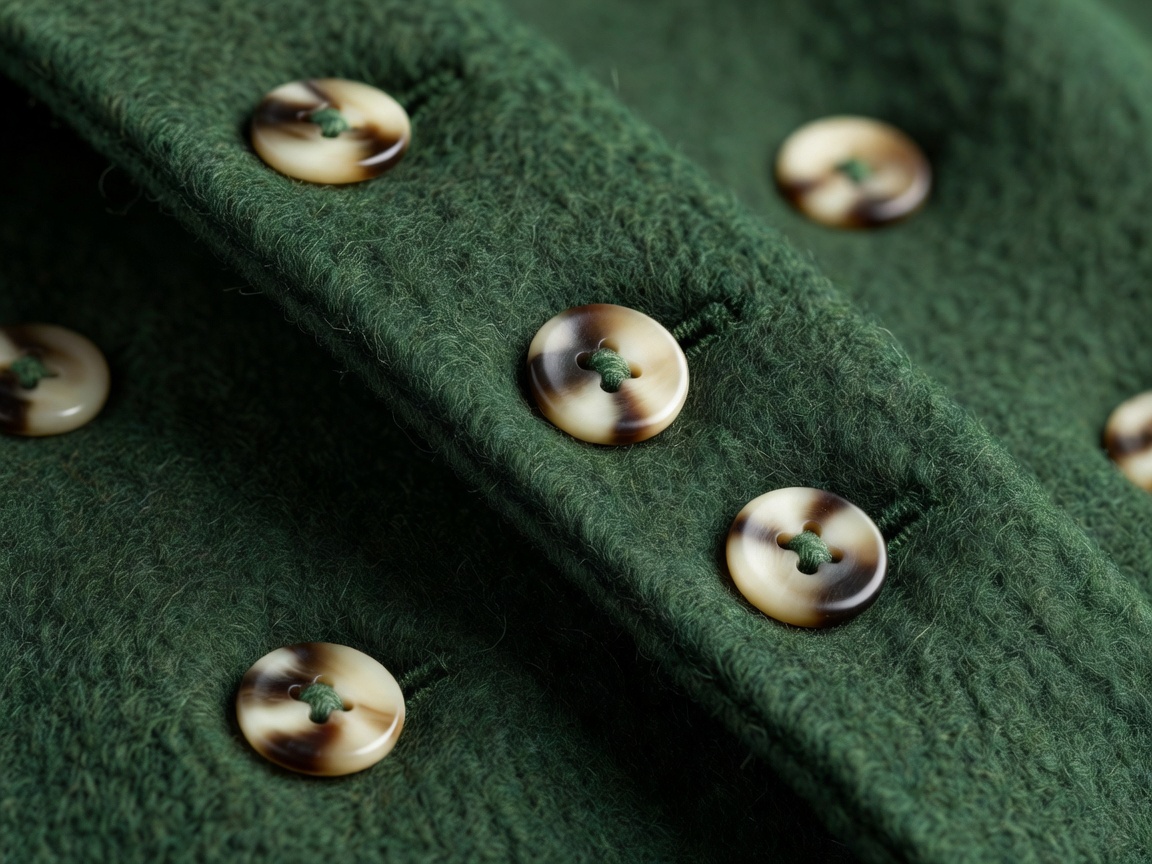
- Staghorn Buttons (Hirschhornknöpfe): Cut from naturally shed red deer antlers across Austrian mountain estates, offering individual organic grain patterns and heat-resistant durability.
- Contrast Braid Trimming: Dark bottle-green (Jägergrün) or deep rust wool tape framing the stand-up collar, cuffs, and welted pockets to prevent fraying at high-wear boundaries.
- Inverted Back Box Pleats: Deep back pleats fastened with a decorative half-belt (Dragoner) that allow unencumbered arm elevation while ski pole poling or driving horse-drawn carriages.
Sustainability and Biological Lifecycle
In an era of synthetic microplastic shed from petroleum polyester fleeces, Austrian boiled wool represents an entirely circular, biodegradable alternative. A properly milled loden coat often endures for thirty to forty seasons, developing a rich patina that synthetics cannot duplicate.